5 Class 2 Road Base Projects in Perris
Plan Perris drive approaches, paver bases, equipment pads, access lanes and hardscape preparation with Class 2 Road Base.
1. Prepare a paver walkway
Use the project specification to establish excavation, compacted base depth and lift thickness before ordering. Paver bedding sand is a separate material and should have its own pile.
2. Build a firm access lane
For a larger Perris property, confirm subgrade, drainage, expected vehicles and finished elevation. Road base cannot correct an unprepared soft subgrade by itself.
3. Support a small equipment pad
A prepared pad may call for compacted aggregate below its finish. Follow the plan for dimensions, thickness and compaction rather than using a generic decorative-rock depth.
4. Rebuild a drive approach
Mark the work limits and maintain drainage away from the road. Public right-of-way work may require permits or a contractor, so confirm responsibility before ordering.
5. Stage base for a patio
Order Class 2 base separately from washed sand and decorative finish material. Mark each pile location so products do not mix on an active site.
How much road base do I need?
Calculate area times uncompacted depth and include the compaction allowance specified by the installer. Send the required cubic yards or tons and the project specification for review.
Perris job-site delivery
Show the property entrance, firm route, turning area and dump zone. Name the receiving contact and keep equipment out of the truck exit during the window.
Choosing Class 2 Road Base for a Perris project
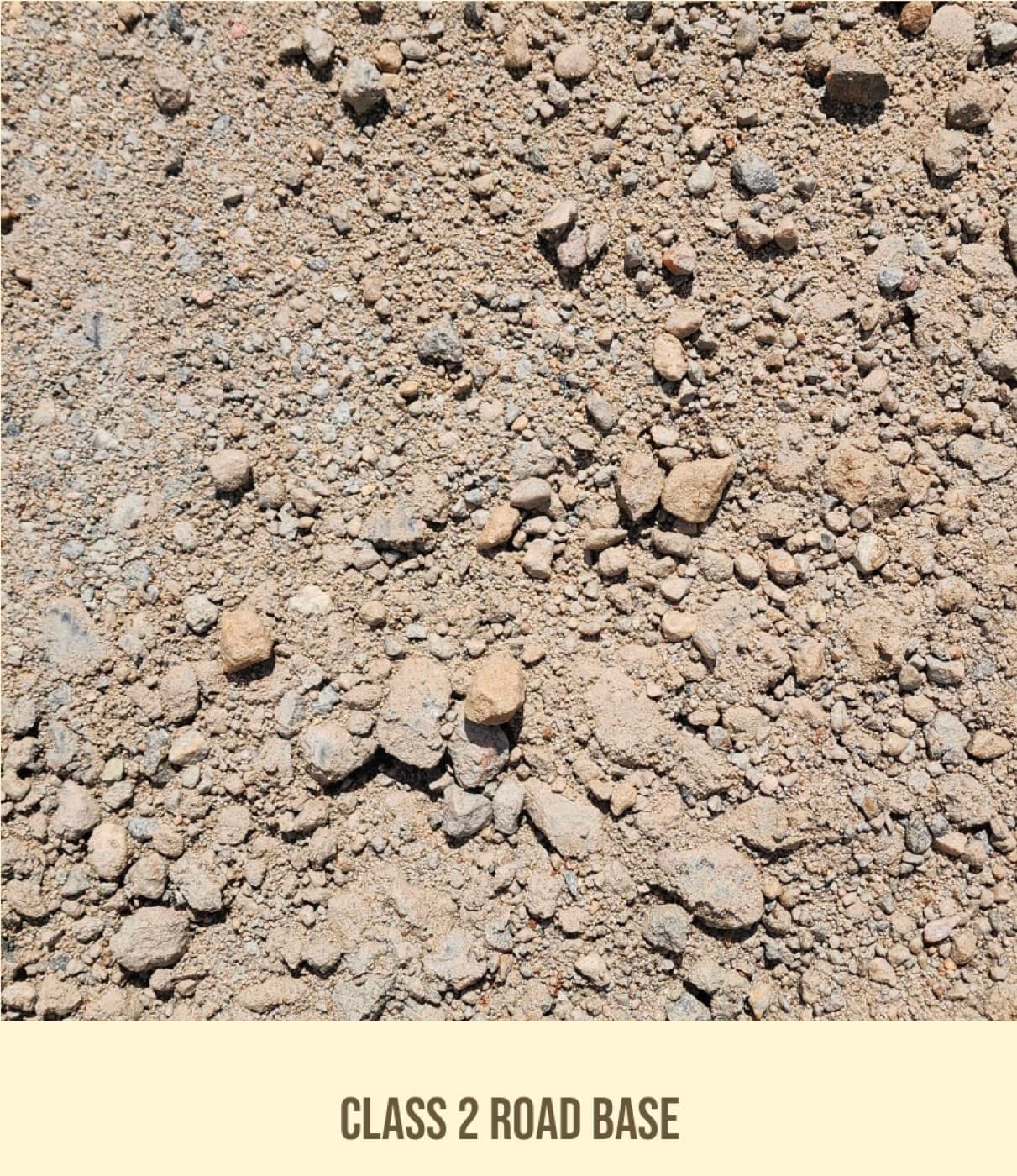
Class 2 Road Base is a compactable aggregate used below pavers, slabs, drive approaches and other prepared hardscape areas. Confirm the required specification and compacted depth with the project plan before ordering. In Perris, start with the actual installation area rather than choosing a quantity from the lot size. We quote Perris deliveries in 92570 and 92571 and surrounding Mead Valley-area routes. Large-property orders should identify the actual entrance, receiving contact and firm unload zone rather than relying only on the street address. Compare the material with existing paving, stucco, planting and edging in daylight. Natural material can change in color, moisture, size distribution and texture by source and load, so a product photograph is a guide rather than a promise that every piece will look identical.
Prepare the area before material arrives
Remove weeds and debris, identify irrigation and utilities, establish the finished grade and install the required edging or retention. Do not cover tree root flares, drainage inlets, utility lids, building weep details or access points. A decorative material is only the visible finish; the long-term result also depends on subgrade, drainage, compaction and the installer's preparation. For sloped or drainage-sensitive work, use a qualified plan instead of expecting loose rock, DG, soil or mulch to correct an underlying runoff problem.
Measure each project zone separately
Sketch rectangles for the main bed, borders, paths and accents, then record length, width and intended depth for each. Subtract large paving areas and retained planting pockets. One cubic yard covers about 162 square feet at 2 inches deep or 108 square feet at 3 inches before allowances for settling, compaction and uneven grade. Compacted products may require an allowance based on the installation method, while material sold by the ton needs a product-specific weight conversion. Send the measurements with photos so the quantity discussion reflects the real shapes and conditions instead of one broad estimate.
Plan the pile location and city delivery fee
The material price and delivery fee are separate. Landscape Rock Direct uses the configured fee for the delivery city rather than advertising one universal price for every address. Before scheduling, send the address, ZIP, gate or private-road instructions, overhead clearance, driveway grade and a wide photo of the firm proposed pile location. Keep cars, trailers, bins, workers and equipment clear during the delivery window. If a city fee is not configured online, request the amount directly so it can be confirmed without guessing.
Request a complete Perris quote
Include the exact material name, preferred size or color, estimated yards or tons, project dimensions, delivery address and preferred timing. Mention whether the area is an HOA property, gated community, active job site or shared driveway. Ask about stock and the delivery window before arranging labor. The quote should confirm the selected product, current material price, the fee that applies to Perris, load limitations and truck access. Do not substitute decorative gravel, #57 rock or washed stone when a plan specifically calls for Class 2 base.
Frequently asked questions
Is Class 2 base the same as #57 rock?
No. Class 2 base is a graded compactable blend, while #57-style rock is commonly used as a drainage aggregate. Follow the project specification.
Is road base sold compacted?
The material is delivered loose. The installer is responsible for placement, moisture conditioning and compaction.
Can road base be dumped on soft ground?
Placement depends on safe truck access. Send photos; the truck cannot enter an unsafe or unstable area.
Do you deliver Class 2 base in Perris?
Yes, subject to stock and truck availability. Send the specification, quantity and access details.